Most people would rather leave any electrical work to somebody qualified (or at least very experienced) in the trade. However, there is nothing legally that can stop* any homeowner carrying out work on the electrics in their own house: what can happen is that Building Control (part of your County Council’s remit) can insist that any house’s electrics are remediated to an acceptable standard if the work is found to be faulty, say when you come to sell it. Putting aside all that, I can imagine keen DIYers want to know what tools I would recommended to change light fittings, a plug or a switch, for example. With that in mind, here are a few tools I personally use and would recommend to the intelligent DIYer. Don’t forget to turn the electricity off at your fuse box (not at just the switch) FIRST before you start any fiddling, though.
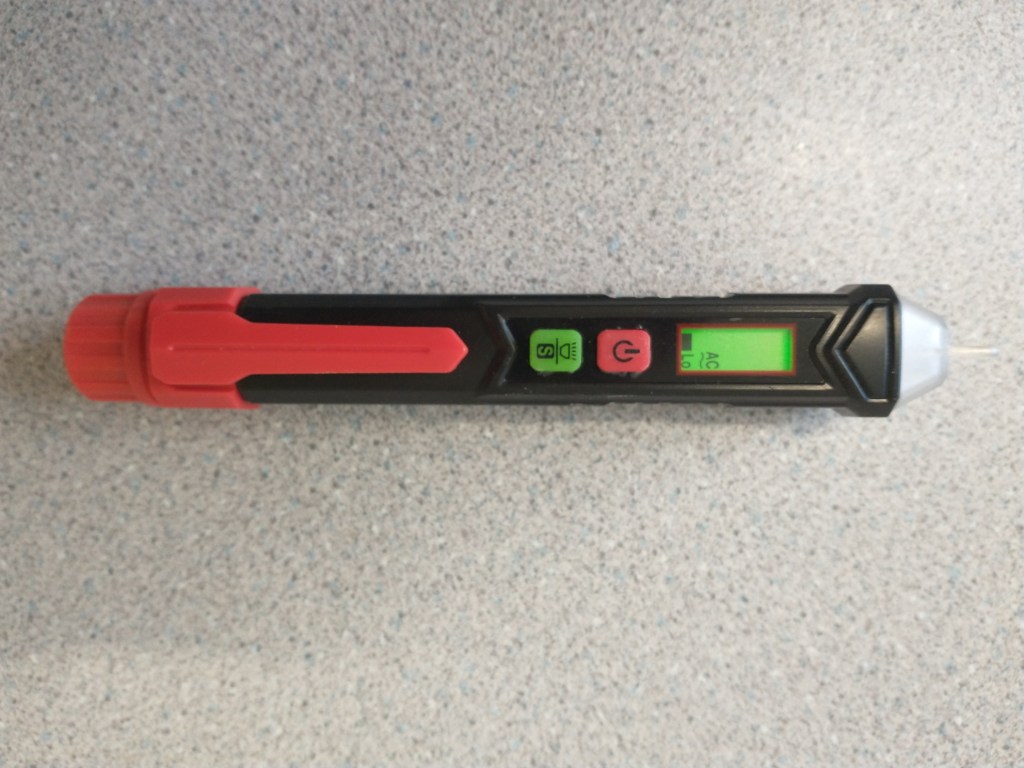
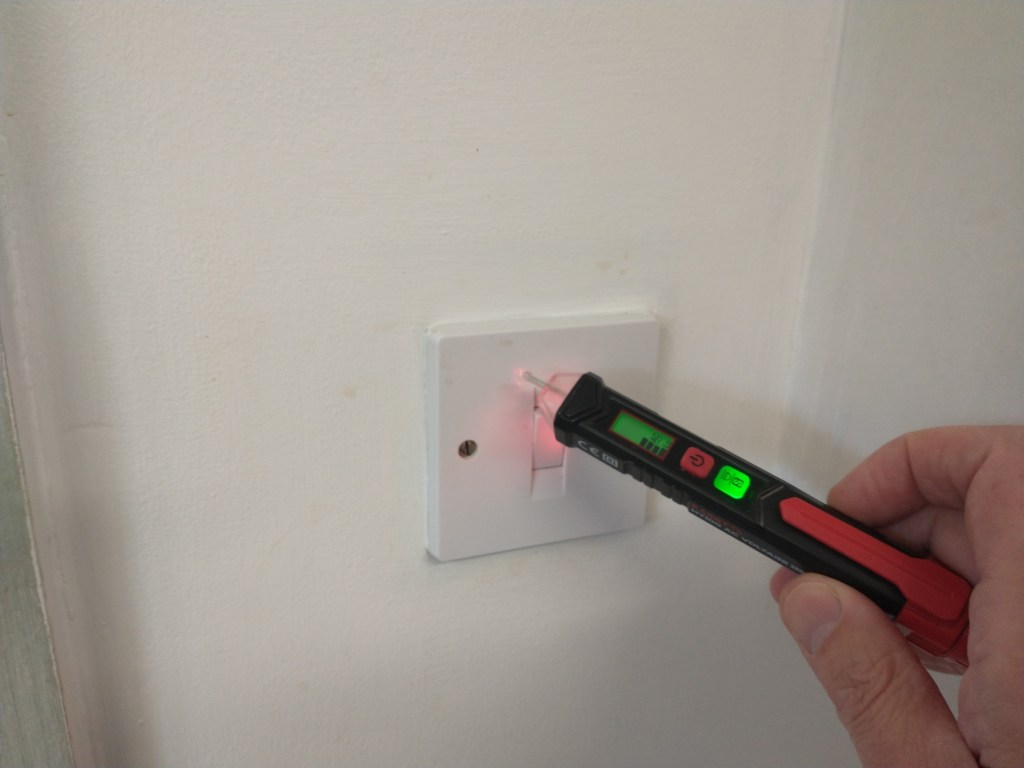
The first thing on my list is a voltage indicator stick. You need to check for certain that whatever you are messing with has no voltages present. This device glows at the tip and emits an audible noise in the presence of an electric field (i.e. a voltage). They aren’t infallible – holding one near a flourescent light, for example, can give a false positive. Equally, the stick needs to have a certain voltage to operate – some models only work above a potential of 200V, which is plenty above the lethal level, so be aware. Always check that the stick works next to a known working mains voltage, e.g. the flex to your TV or kettle before use. [One thing no electrician ever uses these days is the old fashioned neon test screwdriver. Ask yourself: why would you connect yourself to the mains via a cheap bit of metal and plastic, not made to any safety standard, containing nothing but a tiny carbon lump between you and certain death? If you still have any doubts, watch this well-respected sparky illustrate why they are so lethal.]
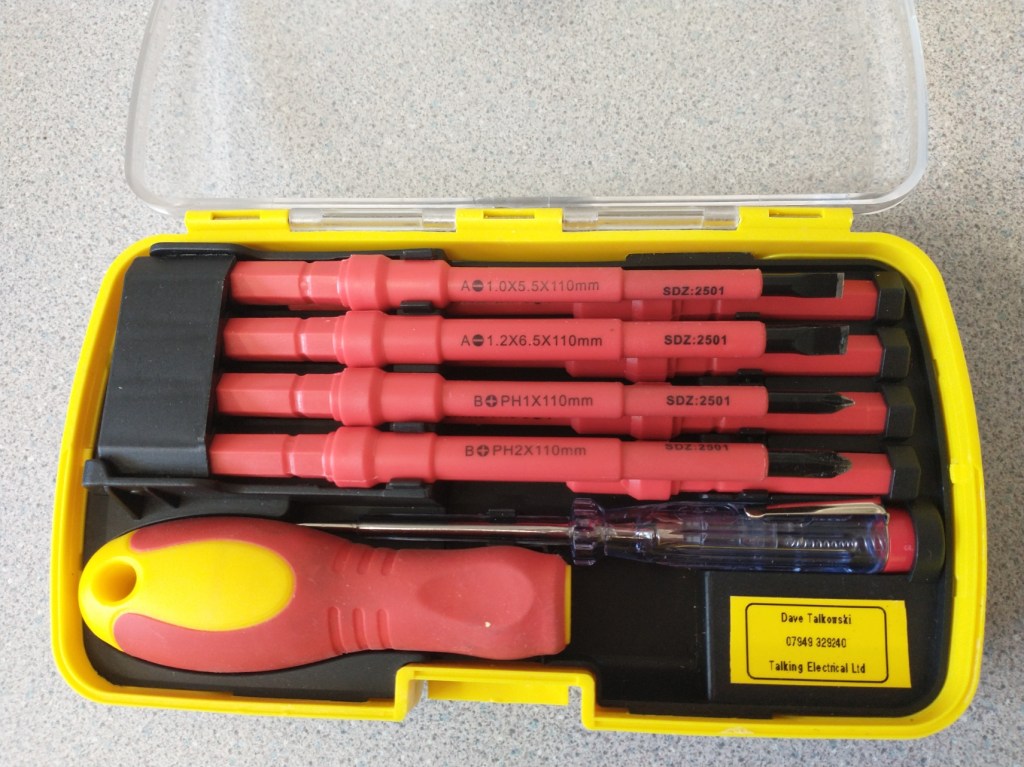
Insulated screwdrivers are my next thing. I purchased this basic set from Wickes (and yes, I do know that one of the aforementioned lethal screwdrivers is in the kit). Being compact and light, I take these with me when I first go to a customer site to give a quote, as you never know what might need to be moved (a fascia, a light, etc) to see what problems lurk behind.
The main advantage of this kit is that the screwdrivers are guaranteed to be electrically insulated up to 1000V (way above any normal domestic conditions) and you are supplied with eight different heads that will handle most common fasteners. For proper installation work I use a set of Wera Comfort screwdrivers that fit my hand nicely and don’t slip. Both sets have hardened tips which helps avoid damaging screw heads, or at least offer better purchase on badly damaged ones.
A multimeter allows you to test whether a fuse is blown, or a voltage is present (and the value), or the resistance in some circuit. A few things to look out for on any meter you buy: 1) As highlighted in the photo, my multimeter is rated as a Cat III device. This is a minimum, as Cat II or uncategorized devices (used on car electrics, for example) simply aren’t safe enough. The double square symbol shown also indicates that the meter is double insulated.
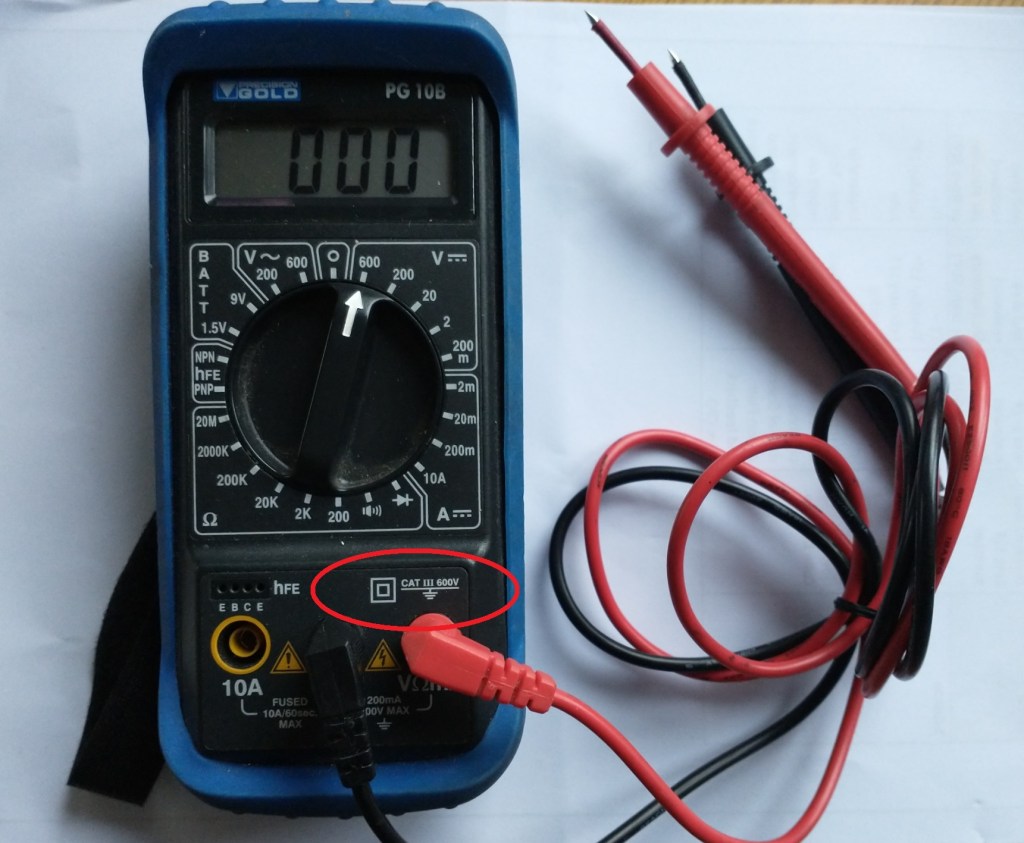
2) Ensure the meter can handle 400V as a minimum, or 600V if you are living in a rural or remote property like old farm buildings. These properties tend to have a 3 phase supply, and people switching heavy motor loads (like say a milking machine) can put nasty voltage spikes on the mains. 3) The probes should also meet the UK GS38 safety standard, which is all about keeping your fingers away from touching the exposed tips. A rule of thumb (literally) is that the exposed tips should be no longer than 4mm, and the probes stop your fingers from sliding towards the ends. Although a multimeter like this is sufficient for working on French electrics, it doesn’t meet the UK wiring regulations (BS7671) for proper testing of an electrical installation, so I have to use my properly calibrated multifunction tester to issue works certificates for anything I do for my clients.
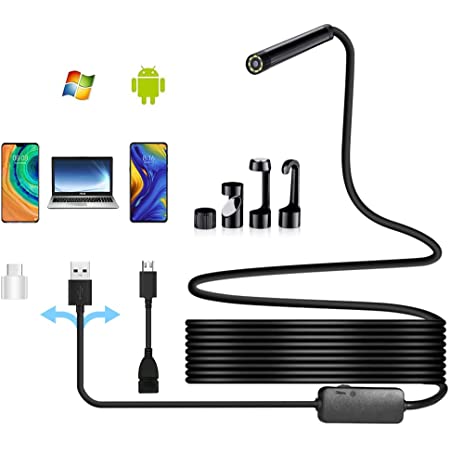
An endoscope camera is one of those little-known but invaluable tools that allow you see inside or behind things, without having to dismantle or demolish anything. Basically, it turns your mobile phone (or PC) into a flexible remote TV, where the camera at the end of the 5m long endoscope lead is only 5mm diameter. The lead is semi-rigid, so the camera can be poked into ceilings or wall cavities to look for joists, obstructions, pipes, cables and whatnot, plus it comes with an adjustable front-facing LED light to illuminate whatever you are inspecting.
My particular model came with an angled mirror, a magnet (to retrieve stuff like keys from drainpipes) and a hook. The camera is waterproof, so can be safely shoved inside drains, pipes, water tanks, cisterns or indeed look for any leaks inside pipework. This gadget has saved me hours and avoided damaging customers properties in trying to find out where cables are routed (or could be routed if none exist). Alas, these cameras can be used for criminal activities too, so I always consult the homeowner (and show them what I am doing) before and after taking pictures.
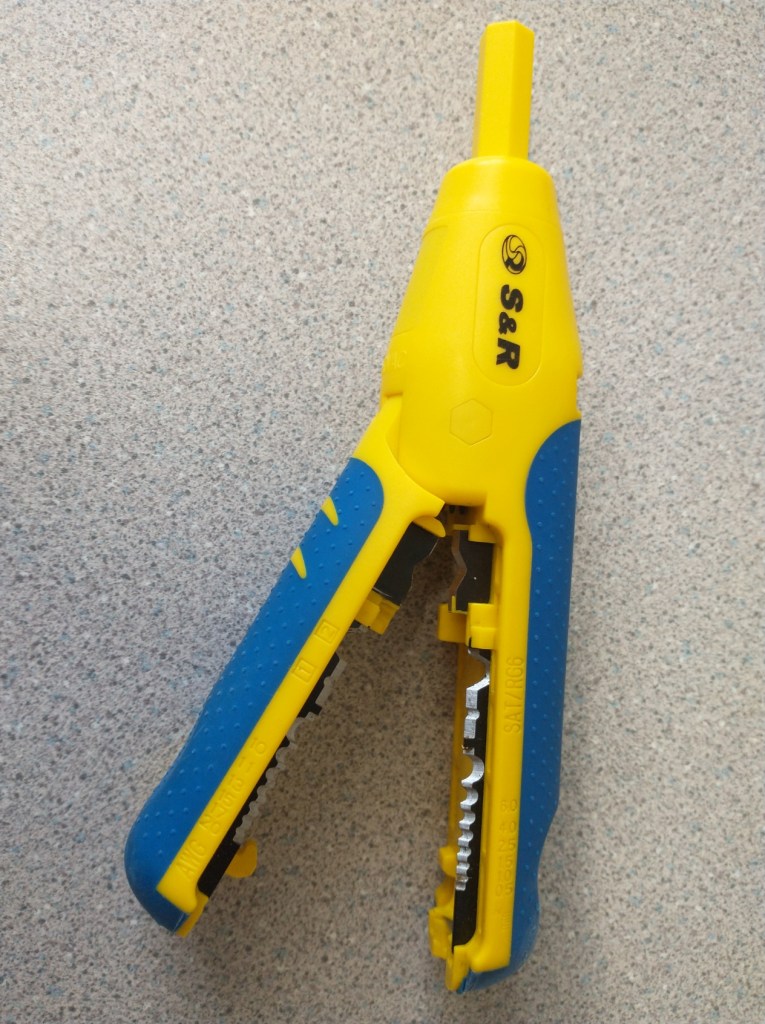
Everyone has their favourite wire strippers, and there are a huge variety of designs are available. This model I picked up from a well-known online retailer and has the advantage it can be used on flex, data cable, aerial cable, flat twin & earth and single core cable too. It has a couple of faults – the screwdriver attachment is too weak to be used on (say) a woodscrew, and you can inadvertently catch your fingers in the wickedly sharp blades, if you aren’t careful. Better designed (and therefore much more expensive) models like the Knipex ergostrip are available for the serious installer (there’s even a left hand version), but being priced at more than £30, it takes some justifying for the average user. That said, I have put it on my Christmas list in the hope that some family member might make me happy.
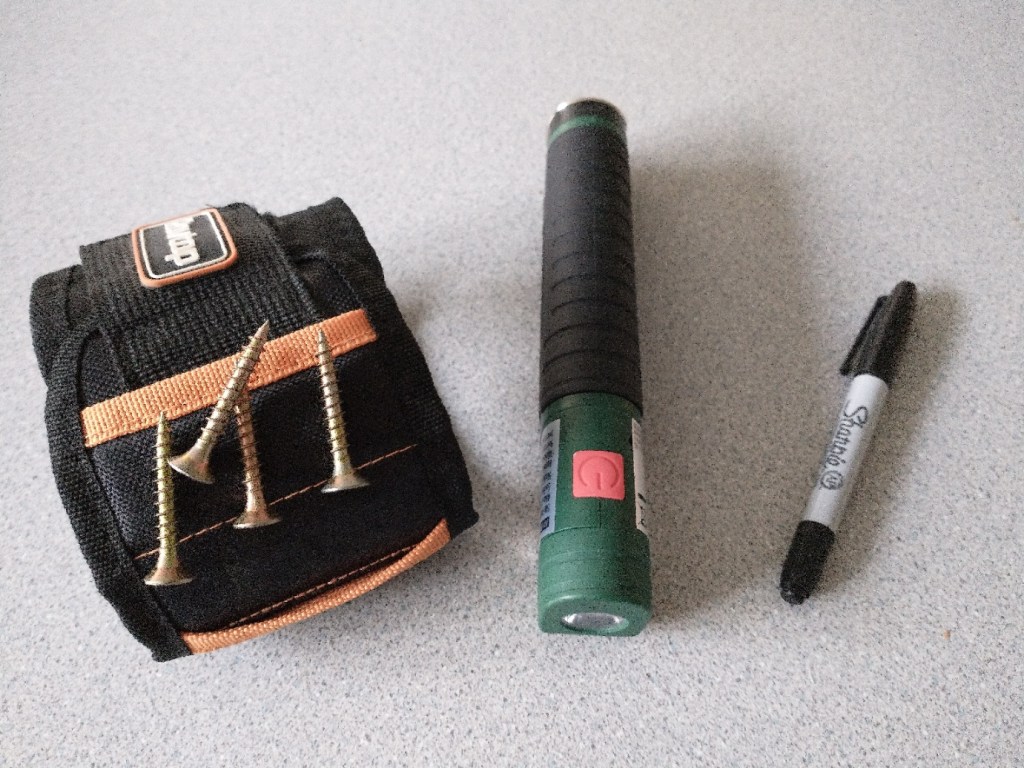
The humble Sharpie pen, a magnetic cuff and an LED rechargeable torch complete my list of useful bits. The Sharpie allows you to mark the outside of a PVC cable, or the inside of a switch plate with helpful information (like ‘Live supply’, ‘To Stairwell Lights’, etc). The magnetic cuff allows me to gather up screws and keep them attached to the cuff while I work. There is nothing more frustrating than searching for a dropped screw that has fallen down behind something immovable. Finally, this handy rechargeable torch is very bright and allows me to work in unlit locations (like under stairs, in lofts or garages) or where the power is turned off.
** I say no legal barrier because an Englishman’s home is his castle, right? However, after mucking around with your electrics you could still be prosecuted under the Health & Safety at Work Act, if anyone gets a shock or injured/killed as a result of your handiwork, and your Local Council and/or Distribution Network Operator (SSE Ltd around here in Wiltshire) could charge you for any repairs they deemed necessary. “If in doubt, call someone out.” is my best advice.
 Talking Electrical Ltd