
Why on earth would you want to know anything about French electrics? Bear with me, though perhaps you should look away now if you:
- dislike anything about the EU, and/or
- think that the UK always does things better than Johnny Foreigner ever could,
- the UK has nothing to learn from anyone (and we can have our cake and eat it).
For those of you fortunate (or mad) enough to own/rent a French property, the electrics can be a little confusing. A small table of common electrical features illustrates the point:
UK Electrical feature
- Three pin fused appliance plug leads
- Ring main sockets
- Supplied live, neutral & earth
- 40A to (common) 100A mains supply
- Supply protected with cartridge fuse
French electrical equivalent
- Two pin unfused appliance plug leads
- Radial circuits only (no ring mains)
- Supplied live & neutral only
- 6kW (~26A) to 15kW (~65A) supply
- Supply protected with 2-pole RCD
Plugs and Ring Mains
To understand the differences between the first two features (plugs & ring mains) requires a little bit of a history lesson. It all starts during WW2, when the UK started thinking about how it was going to build new housing to replace its bombed out stock. Additionally, post-war there was a shortage of raw materials (including copper cable).
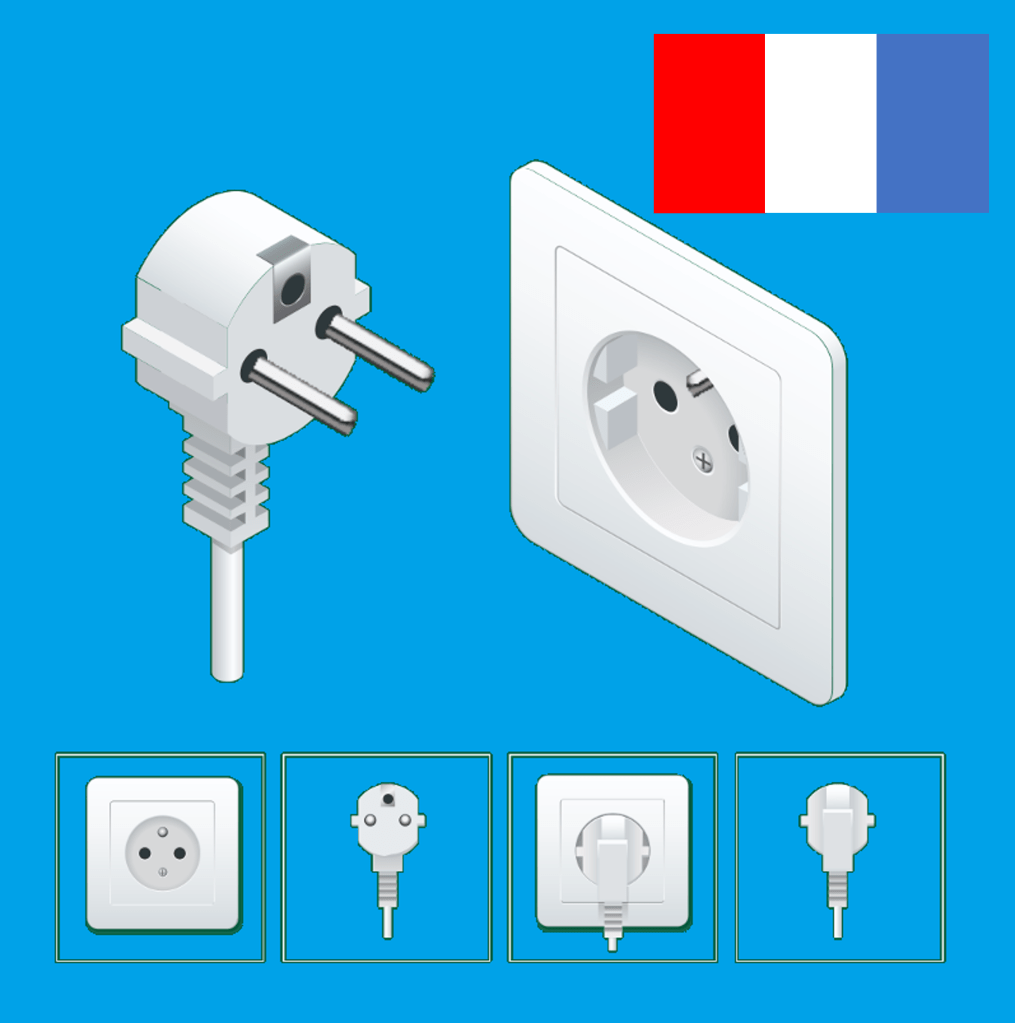
Back in 1944, the IEE determined that using a ring main arrangement for sockets used 30% less cable and was 25% quicker to install, so this has been adopted ever since. So why don’t the French (or indeed most other countries) use them? Well, a few reasons: First up, their view is that the miniature circuit breaker in the consumer unit should protect all the downstream cables from overcurrent (i.e. a direct short) and an RCD should protect people from any earth faults. This saves them fitting a fuse in every single plug (making all their appliances that bit cheaper) and they don’t usually bother having switches on any sockets either. This also means that it doesn’t matter which way round you wire the live and neutral in a French socket (just something for everyone to be aware of)!
Secondly, although ring mains use less cable, nowadays the UK wiring regulations (BS7671:2020, which by the way was NEVER defined by the EU) insist a ring main has additional testing to prove that the ring is complete (which is why you need an electrician with specialist kit to confirm this). The fact that each socket works in the ring is NOT enough (DIYers please note). This adds to the costs of UK installations.
Thirdly, adding any extra sockets to an existing ring main is limited by the capacity of the various connected cables, which requires careful design, installation and/or additional protective fuses in the UK. On radial circuits (à la France), you can simply have up to 12 socket outlets on 2.5mm² cable (or up to 8 sockets on 1.5mm² cable), which is much more straightforward to install and test.
Mains supply differences
The French electricity supply (pretty much dominated by EDF) does not provide your property with an earth – that is the responsibility of the householder. So the safety of the entire French electrical installation lies squarely with the property owner. The French electricity supply cables are (mainly) all above ground too, so no risk of bashing an earth rod through a live cable (though you could still presumably hit water or sewage pipes). Belatedly, the UK electricity suppliers have recognised that they cannot guarantee their earth connection either (for a variety of reasons), and usually recommend provision of local earth rods/tapes/plates.
The limitations of total power available from the French electricity supply means that British home owners abroad are often surprised when they install an electric power shower that it trips out all the electrics. In the UK we have rather beefy supply cables to households, but the more sparsely populated countries (e.g. France and Ireland) have to limit the supply (especially in apartment blocks or rural areas), so you have to install clever gadgets like these to manage what gets turned off (and when) you want to do your daily douche*.
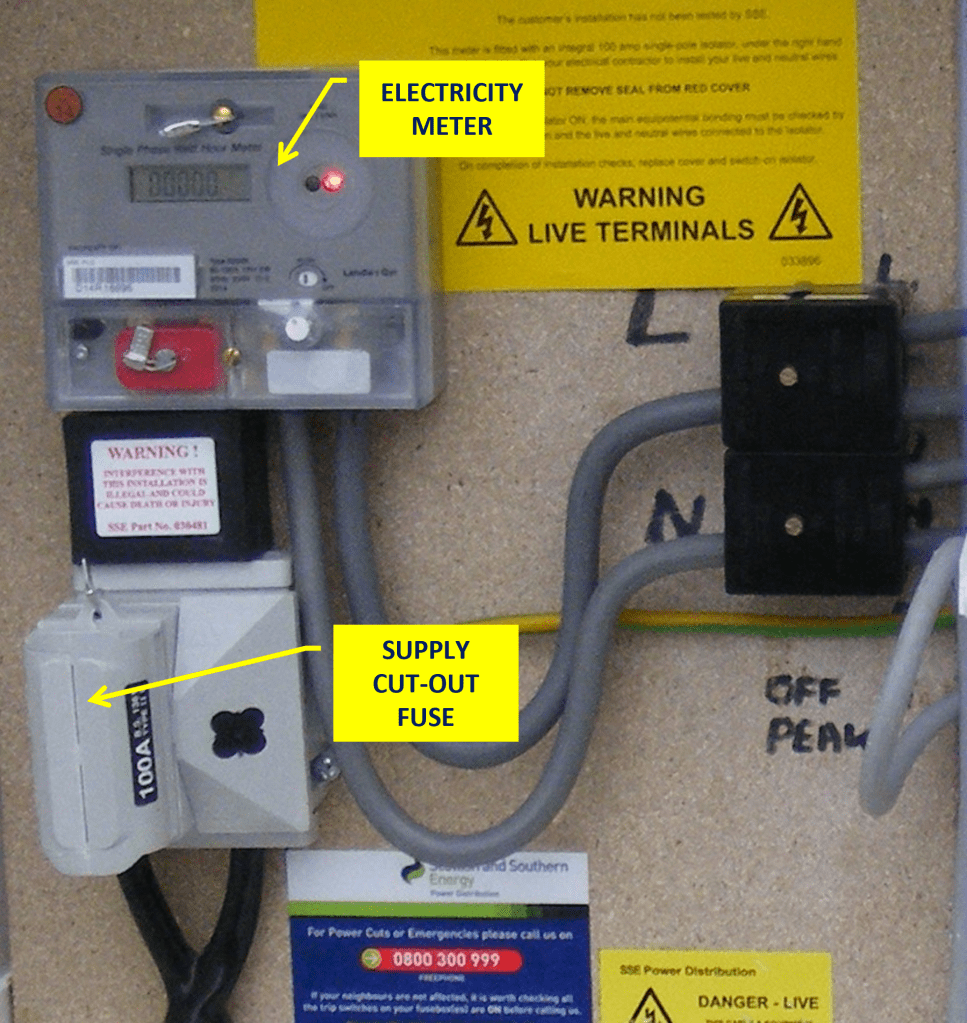
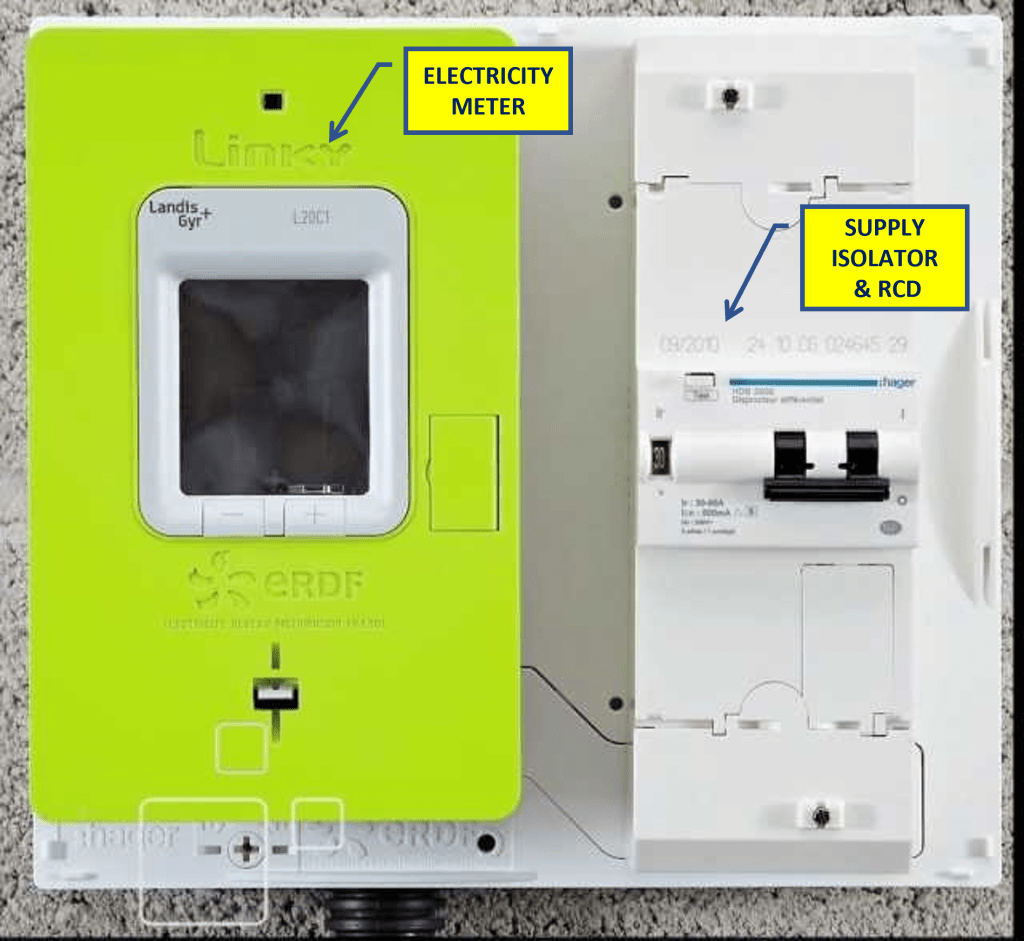
The mains supply in France is normally protected by a large 2 pole RCD rated at 500mA. This allows a householder (or an electrician) to safely isolate the entire property to carry out (for example) a consumer unit change. By contrast, in the UK we are still using ghastly BS 88 cut-out cartridge fuses that cannot** shouldn’t be fiddled with by anyone other than the electricity supply company. For example, to change his entire electrical consumer unit, Mr Jacques Propriétaire in France merely has to open his supply cabinet and flick the main switch. In the UK by contrast, Jack Householder will have to ring up his electricity supplier, arrange a call-out to remove the fuse, book an electrician to replace the consumer unit, and then arrange a replacement cartridge fuse to be fitted. [Of course, nobody does it like this in the UK, regardless what the law says, which is why we have cowboys doing electrics.]
So what?
This is all very well, but what is my overall point? Firstly, in France you don’t actually need to be a qualified electrician to fiddle around with your electrics. Only new builds or major renovations need to be approved by an independent party (the Consuel). The only other certification needed is an inspection report (Diagnostic Electrique) before the sale of a property, which needs to be done by a qualified contractor. Contrast that with the UK where under Health and Safety laws, where almost all electrical work has to be carried out by a registered competent person, although no EICR is legally required upon the sale of a property.
Secondly, if the UK is safer (electrically speaking) than our continental friends, this should be borne out by the statistics and indeed it is: latest French figures (2018) show that on average about 40 people per year die from electric shock, while in the UK we average about 20 per year (figures only to 2017). However, faulty electrics are more likely to cause fires than electrocution, which has killed far more people (300 p.a. in France vs ~30 p.a. in the UK) which has driven most of our H&S legislation accordingly.
Conclusion
Our regulations governing electrical safety has helped keep people safer, no doubt about it. We in the UK could certainly make things easier and simpler – my electrical course tutor (of many years standing) disliked ring mains and made sure we knew how to check them properly. Being electrically qualified helps avoid DIY disasters, but then again French electrics are much simpler to understand (and thus less to get wrong). Simple features like mains supply isolators and having isolated circuits for various rooms allow easy fault finding and upgrades. Adding new circuits, extending old circuits and validating the installation is so much easier in France, plus the French have (ironically) less paperwork. Here in the UK we are making electricians a rarer breed because of the onerous qualification and certification processes – this will only lead to more DIY disasters or cowboys doing work on the cheap. We need to make electrical installation easier, not harder, just like my company motto: Safe, Secure, Simple.
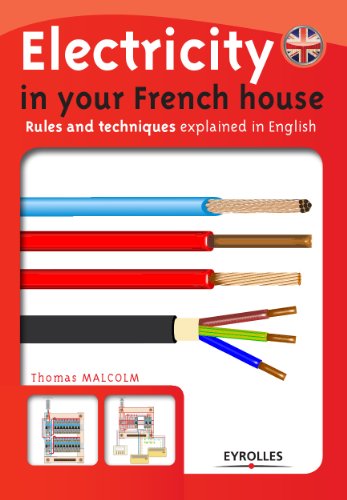
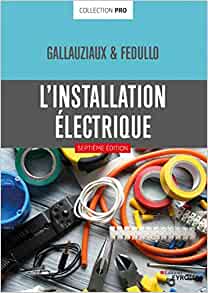
[One last thing: If you do need to fiddle with your French electrics, I have found two very useful guides shown below (you will still need test kit, but this can be hired).]
* (douche = shower). People installing car chargers in the UK often need these shower priority units for the same reason.
** It is illegal to fiddle with the cut-out fuse unless you are authorised by the DNO (i.e. SSE Ltd around here). However, most electricians put their own life as higher up the importance scale, so remove them pretty much whenever required and damn the torpedoes.
 Talking Electrical Ltd
Is an isolated as well as an earth leakage circuit breaker obligatory
LikeLike
An emergency double-pole isolator (coupure d’urgence) is required as well as an RCD (différentiel) in the consumer unit normally. The only exception would be if the EDF isolator is right next to the consumer unit, but usually it is stuck somewhere at the edge of the property in its own cabinet. A single RCBO (disjoncteur différentiel) in your consumer unit acts as both isolator and RCD, so fulfils both requirements.
LikeLike
excellent, I’m Part P etc and so yes doing my French place myself love the content and tone of this. Could not agree more well done sir I’m off you buy the blue book and brush up my French. For the truly brave the full French regs are available on PDF for free not like the UK where they sting us for the best part of a hundred quid every few years for an updated version.
LikeLiked by 1 person
Adrian, struggling to find the French regs PDF, can you post a link please.
LikeLike
For anyone looking for a free copy of the French regulations, alas there isn’t one any more (not even in French). The various standards bodies (ISO, CENELEC, etc) complained a while ago that their intellectual property was being handed out for free, so have stopped this from happening.
Instead, some general guides are available from manufacturers like Schneider to explain some of the more common rules. Some examples are here:
Click to access NORME%20NFC15-100.pdf
https://go.schneider-electric.com/FR_202104_HOME_GC_Guide-NFC-15100_LP.html
As ever, be aware that these are incomplete and not necessarily the latest legal state of play, so use a healthy dose of common sense.
LikeLike